
Revolutionizing Virtual Try-On with Enhanced User Control
A new approach to virtual try-on technology allows users to control garment fit and style.
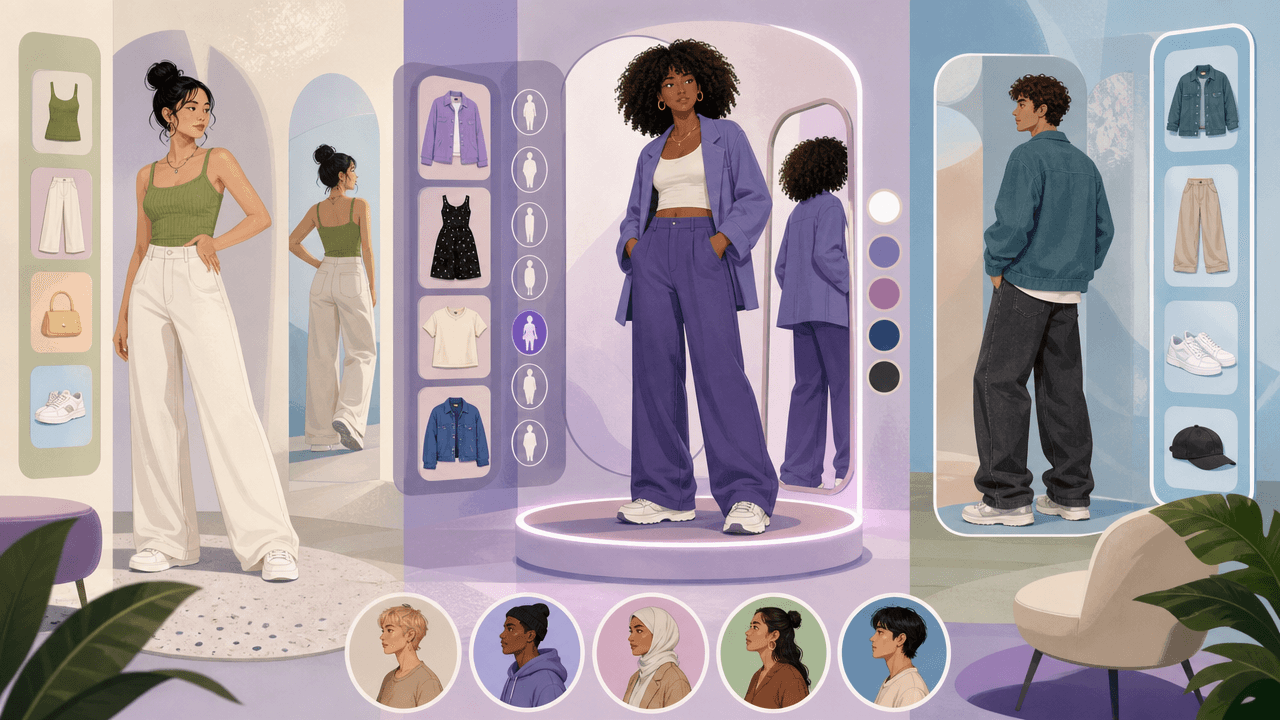
Researchers have developed CtrlVTON, a virtual try-on system that gives users precise control over how clothes fit and appear on their digital avatars. The system uses visual-instance-prompt segmentation to let people adjust garment size, positioning, and styling details before making purchase decisions.
How Visual-Instance-Prompt Segmentation Works
Traditional virtual try-on systems overlay clothing onto body images with limited customization options. CtrlVTON changes this by breaking garments into distinct visual segments that respond to user prompts. Users can specify how they want a shirt to fit - loose around the shoulders, tight at the waist, or cropped at a specific length.
The segmentation technology identifies different parts of clothing items and maps them to corresponding body regions. When a user uploads their photo and selects a garment, they can manipulate individual clothing segments through text prompts or visual controls. The system then generates a realistic image showing how the modified garment would look on their body.
Beyond Standard Size Charts
Most online retailers offer basic size options like small, medium, and large. CtrlVTON allows for granular adjustments that reflect how people actually wear clothes. A user might want their jeans cuffed, their blazer sleeves pushed up, or their dress cinched with a belt.
The system processes these styling preferences and renders them visually. Someone shopping for a button-down shirt can see how it looks tucked in versus untucked, with sleeves rolled up or down, and with different numbers of buttons fastened. These details matter for purchase confidence but rarely appear in standard product photos.
Technical Implementation Details
The [arXiv research paper](https://arxiv.org/abs/2607.09362) describes how CtrlVTON combines computer vision techniques with generative modeling. The system first analyzes the input garment image to identify key structural elements like seams, hems, and closure points. It then maps these elements onto a 3D body model derived from the user's photo.
Users interact with the system through a combination of text descriptions and visual manipulation tools. They might type "make the sleeves shorter" or drag control points on the garment image. The system interprets these inputs and adjusts the virtual garment accordingly, maintaining realistic fabric behavior and lighting.
Impact on Retail Fitting
This technology puts pressure on physical fitting rooms and basic virtual try-on tools that offer limited customization. Shoppers gain the ability to experiment with styling options that might influence their purchase decisions but aren't visible in standard product photography.
The enhanced control addresses a key friction point in online fashion retail - the uncertainty about how clothes will actually look when worn in preferred styles rather than default product poses.
