
Revolutionizing Video Understanding with Open-Source MLLM
VideoChat3 aims to enhance video understanding with a fully open video MLLM.
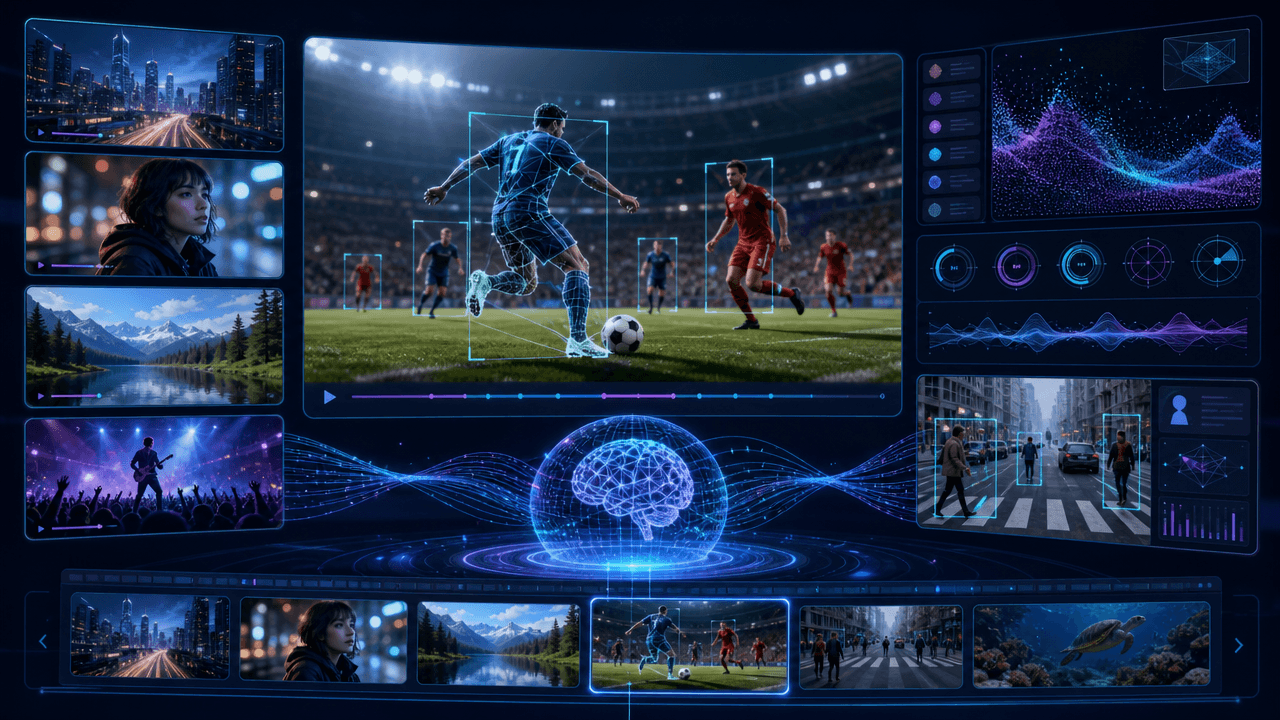
Researchers at Nanjing University have released VideoChat3, an open-source video understanding model that can analyze and discuss video content across multiple domains. The [arXiv / MCG-NJU](https://arxiv.org/abs/2607.14935) paper describes a multi-modal large language model designed to handle diverse video types more effectively than current systems.
What Makes VideoChat3 Different
Most existing video understanding models struggle when encountering content outside their training domains. A model trained primarily on movie clips might fail when analyzing security footage or educational videos. VideoChat3 addresses this generalization problem by combining recent advances in video processing with language model capabilities.
The model processes video frames alongside text prompts, allowing users to ask questions about video content and receive detailed responses. Unlike previous systems that required separate models for different video types, VideoChat3 aims to handle everything from short social media clips to long-form documentaries with a single architecture.
The researchers made the entire system open-source, including model weights, training code, and evaluation benchmarks. This contrasts with proprietary video understanding systems from major tech companies that keep their implementations closed.
Technical Architecture
VideoChat3 builds on transformer architectures but adds specialized components for temporal video understanding. The model encodes video frames into visual tokens, then aligns these with text representations using cross-modal attention mechanisms.
The system processes videos at multiple temporal scales, capturing both fine-grained frame-level details and broader narrative structures. This multi-scale approach helps the model understand quick actions within longer contexts, like identifying a specific gesture during a conversation.
Training involved multiple stages, starting with image-text alignment before progressing to video-specific tasks. The researchers used a mixture of datasets including instructional videos, movie clips, and user-generated content to improve domain generalization.
Performance and Applications
The model demonstrates improved performance on standard video understanding benchmarks compared to previous open-source alternatives. It can answer questions about video content, generate descriptions, and identify specific objects or actions across time.
Potential applications include automated video summarization, content moderation, educational video analysis, and accessibility tools for visually impaired users. The open-source nature enables researchers and developers to adapt the model for specific use cases without licensing restrictions.
The system runs on consumer hardware, making it accessible to smaller organizations and individual researchers who cannot afford expensive proprietary solutions.
Market Impact
This release pressures commercial video understanding providers to justify their pricing against capable open-source alternatives. Companies building video analysis products now have access to a foundation model they can modify and deploy without vendor lock-in, potentially reducing costs for video processing applications across industries.
