
Revolutionizing Video Understanding with Open-Source MLLM
VideoChat3 enhances video understanding with a fully open video MLLM for diverse applications.
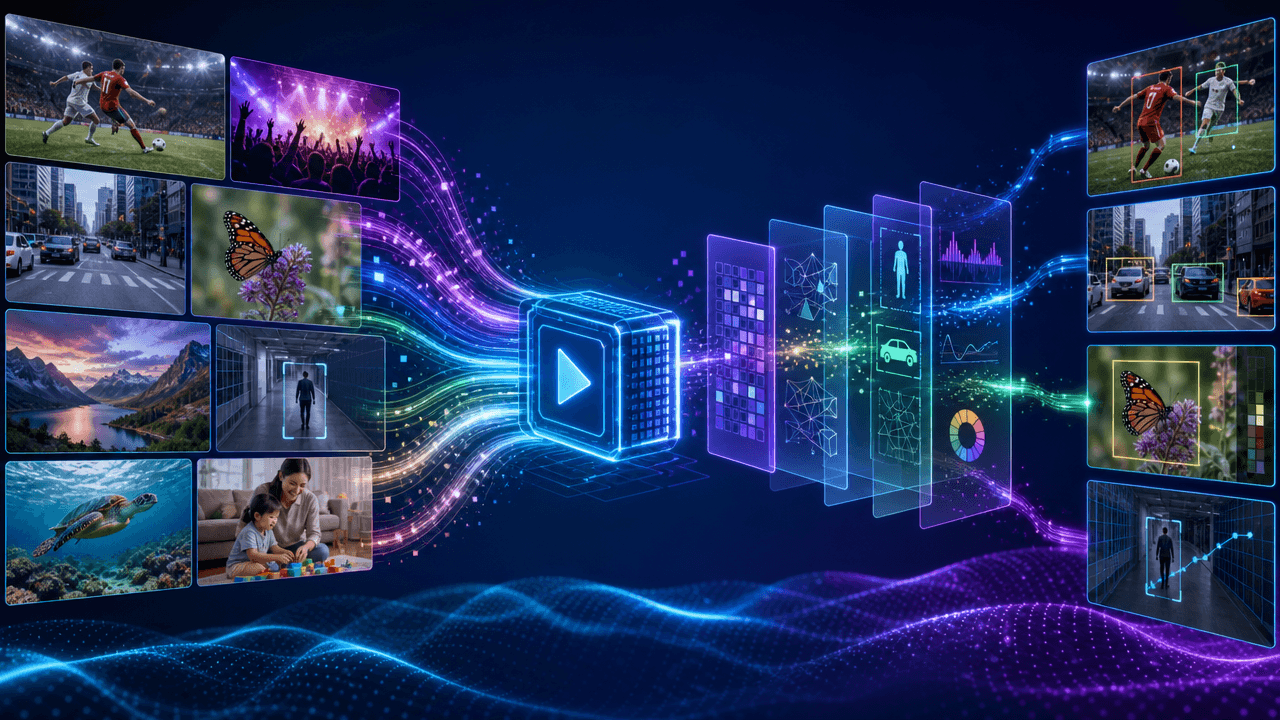
Researchers at MCG-NJU have released VideoChat3, an open-source video multi-modal large language model that can understand and analyze different types of video content. The model addresses a key limitation in current AI systems: most struggle to work effectively across diverse video formats and contexts.
The Generalization Problem
Current video AI models typically excel at specific tasks but fail when applied to different video types. A model trained on movie clips might struggle with security footage. One optimized for sports analysis might falter with educational content. This specialization creates silos where each application requires its own custom-trained model.
VideoChat3 takes a different approach. The researchers designed it as a generalist model that maintains performance across various video domains without requiring specialized training for each use case. The model processes video and text inputs simultaneously, allowing users to ask questions about video content and receive contextually relevant responses.
Technical Architecture
The system combines video processing capabilities with large language model reasoning. VideoChat3 can analyze visual elements, track objects across frames, understand temporal relationships, and connect these observations to natural language queries. Users can upload a video and ask specific questions about what happens, when events occur, or why certain actions take place.
The open-source release includes the model weights, training code, and evaluation benchmarks. This transparency allows researchers to build upon the work and adapt it for specific applications. The team tested VideoChat3 across multiple video understanding benchmarks, demonstrating consistent performance without domain-specific fine-tuning.
Real-World Applications
The generalist approach opens new possibilities for video analysis tools. Security systems could use the same base model for monitoring that educational platforms use for content analysis. Media companies could deploy it for both content moderation and automated captioning. Healthcare organizations could apply it to medical imaging videos and patient monitoring footage using the same underlying system.
The model handles various video lengths and resolutions, making it practical for different hardware configurations. Organizations can deploy it locally rather than relying on cloud-based services, addressing privacy concerns for sensitive video content.
Market Impact
This release pressures proprietary video AI providers to demonstrate clearer advantages over open alternatives. Companies selling specialized video analysis tools now face competition from a free, adaptable solution that handles multiple use cases. The open-source nature accelerates development cycles across the industry as researchers build improvements on the shared foundation.
VideoChat3 represents a shift toward unified video understanding systems rather than task-specific models. The [arXiv / MCG-NJU](https://arxiv.org/abs/2607.14935) research demonstrates that general-purpose video AI can match specialized systems while offering greater flexibility for deployment across different domains.
