
Revolutionizing Traffic Simulation with Flow-ERD Technology
Flow-ERD introduces a new approach to traffic simulation, balancing realism and diversity for autonomous driving.
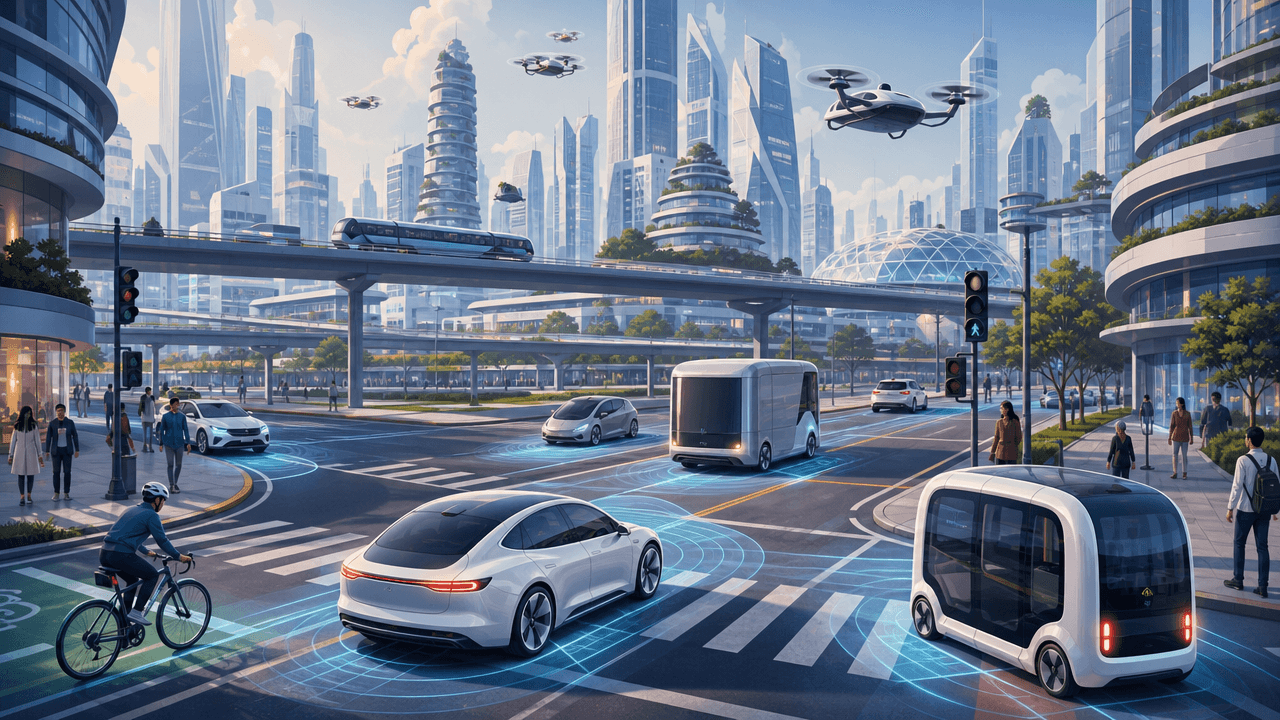
Researchers at Yale University have developed Flow-ERD, a new multi-agent simulator that addresses a fundamental problem in autonomous vehicle training. Unlike existing traffic simulators that focus solely on realistic scenarios, Flow-ERD generates both realistic and diverse traffic situations to create a more comprehensive training environment for self-driving cars.
The Realism vs Diversity Problem
Current autonomous vehicle simulators excel at creating realistic traffic patterns. They accurately model how human drivers typically behave - following traffic laws, maintaining safe distances, and making predictable lane changes. This realism helps autonomous vehicles learn to navigate normal driving conditions.
The problem emerges when these systems encounter unusual situations. A pedestrian suddenly crossing mid-block, an aggressive driver cutting across multiple lanes, or construction equipment blocking a highway lane can confuse autonomous vehicles trained primarily on predictable scenarios. Real-world driving requires handling both the mundane and the unexpected.
Flow-ERD tackles this challenge by intentionally generating diverse traffic scenarios alongside realistic ones. The simulator creates edge cases and unusual traffic patterns that autonomous vehicles might encounter but rarely see in traditional training datasets. This approach exposes self-driving systems to a broader range of situations during development.
Multi-Agent Architecture
The Flow-ERD system uses multiple software agents to simulate different types of road users. Each agent operates independently, making decisions based on its programmed behavior patterns and environmental inputs. Some agents follow standard traffic rules while others exhibit more unpredictable behaviors.
This multi-agent approach allows the simulator to create complex interactions between vehicles, pedestrians, and other road users. The system can generate scenarios where multiple unusual events occur simultaneously - testing how autonomous vehicles handle compound challenges rather than isolated incidents.
The researchers designed Flow-ERD to run efficiently on standard computing hardware. This accessibility means smaller autonomous vehicle companies can use the simulator without requiring expensive specialized equipment.
Training Cost Implications
Developing safe autonomous driving systems currently requires extensive real-world testing, which costs millions of dollars and takes years to complete. Companies must deploy test fleets, hire safety drivers, and collect data across thousands of miles of driving in various conditions.
Flow-ERD could reduce these expenses by providing more comprehensive training scenarios in simulation. Instead of waiting to encounter rare traffic situations during real-world testing, developers can expose their systems to these scenarios virtually. This approach allows for faster iteration and testing of safety systems.
The [arXiv / Yale University](https://arxiv.org/abs/2607.06957) research demonstrates how Flow-ERD generates scenarios that existing simulators miss. By combining realistic baseline traffic with deliberately diverse edge cases, the system creates a more complete training environment for autonomous vehicles.
This technology puts pressure on companies relying solely on real-world data collection for autonomous vehicle training. It makes comprehensive scenario testing accessible to smaller players who previously couldn't afford extensive real-world testing programs.
