
New Framework Enhances Scenario Generation for Autonomous Driving
A novel framework automates the generation of diverse test scenarios for autonomous driving systems.
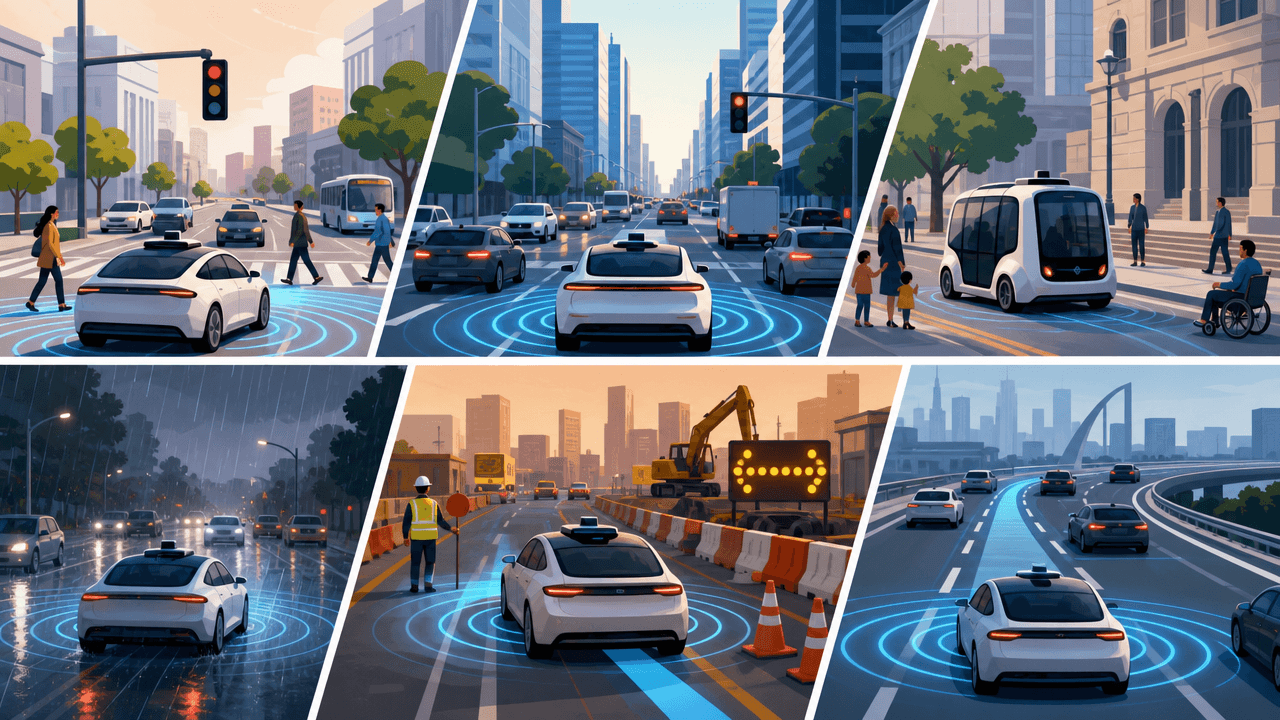
Researchers at the Technical University of Munich have developed Chat2Scenic, a new framework that automatically generates test scenarios for autonomous vehicles from written regulatory descriptions. The system uses an iterative approach based on retrieval-augmented generation (RAG) to create executable scenarios that comply with driving regulations while providing the diversity needed for thorough testing.
The Scenario Generation Challenge
Autonomous vehicle companies face a massive testing problem. Before self-driving cars can safely navigate public roads, they must be validated against thousands of different driving scenarios. Current methods for creating these test cases are largely manual, requiring engineers to hand-craft each scenario based on regulatory requirements and real-world driving conditions.
This manual process creates bottlenecks in development cycles. Engineers must interpret complex regulatory text, translate it into specific driving scenarios, then code those scenarios into simulation software. Each scenario might involve multiple vehicles, pedestrians, weather conditions, and traffic patterns. The combinations multiply quickly, and ensuring comprehensive coverage becomes expensive and time-intensive.
How Chat2Scenic Works
The [Chat2Scenic framework](https://arxiv.org/abs/2607.14387) automates this translation process. Engineers input regulatory descriptions in natural language, and the system generates executable test scenarios that can run directly in simulation environments.
The framework uses RAG technology, which combines large language models with a database of relevant information. When processing a regulatory requirement, Chat2Scenic retrieves relevant examples and context from its knowledge base, then generates scenarios that match both the regulatory intent and technical execution requirements.
The iterative design allows the system to refine scenarios through multiple passes. If an initial scenario doesn't fully capture a regulation's requirements, the framework can adjust parameters like vehicle speeds, positioning, or environmental conditions until the scenario properly tests the intended behavior.
Technical Implementation
Chat2Scenic generates scenarios in formats compatible with existing simulation platforms. The framework produces executable code rather than just descriptions, meaning the generated scenarios can immediately run in testing environments without additional human intervention.
The system maintains compliance tracking throughout the generation process. Each produced scenario includes metadata linking it back to specific regulatory requirements, creating an audit trail that demonstrates how testing coverage maps to legal obligations.
The framework also handles scenario parameterization automatically. Rather than creating single, static test cases, Chat2Scenic can generate families of related scenarios that test edge cases and boundary conditions around each regulatory requirement.
Industry Impact
This automation directly addresses one of autonomous vehicle development's most resource-intensive processes. Companies spending months creating comprehensive test suites can now generate equivalent coverage in significantly less time.
The framework also standardizes scenario quality across development teams. Manual scenario creation often varies between engineers, but Chat2Scenic applies consistent interpretation and implementation of regulatory requirements. This standardization makes it easier for companies to demonstrate regulatory compliance and compare testing results across different vehicle systems.
