
Ghost Font enables human readability while blocking AI recognition
Ghost Font is a new typeface designed for human readability that AI cannot interpret, aiming to protect privacy and data.
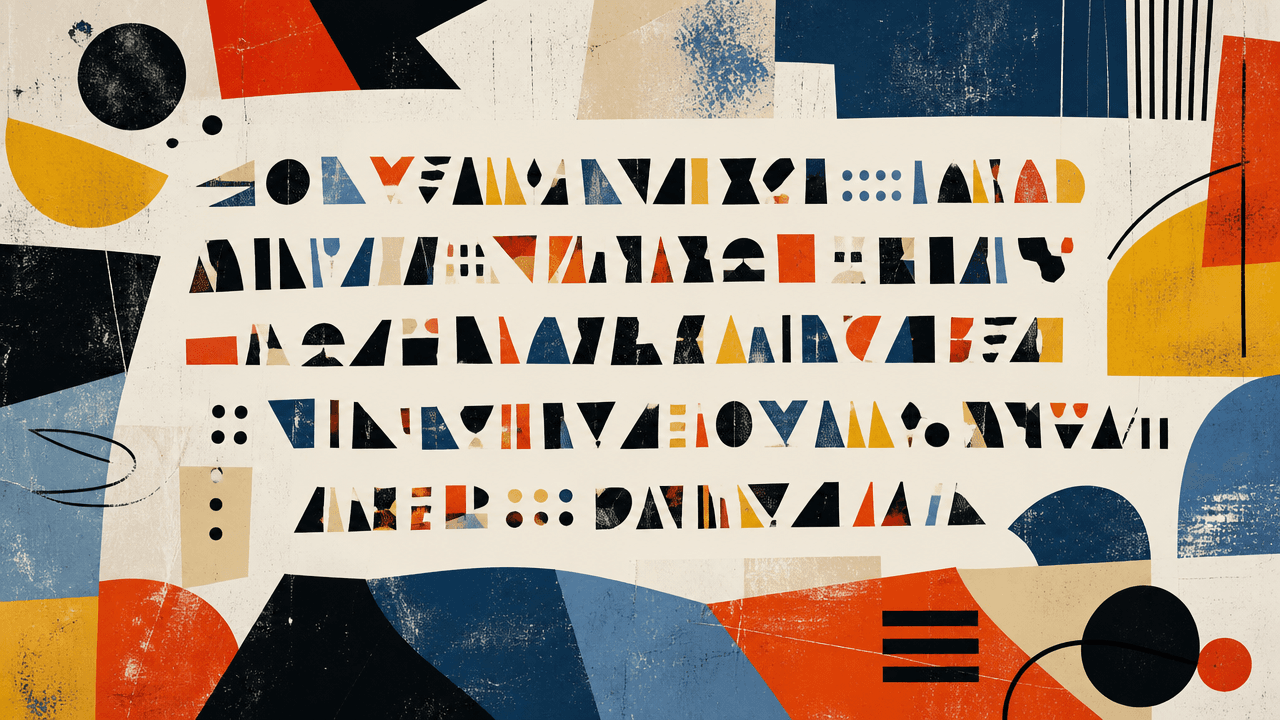
Ghost Font has shipped as a new typeface that humans can read while blocking AI systems from recognizing the text. The font works by creating subtle visual perturbations that human eyes can process but confuse machine learning models trained on standard text recognition.
MixFont developed the technology to address growing concerns about AI systems automatically scraping and analyzing written content. The font represents a novel approach to data privacy that operates at the visual level rather than through encryption or access controls.
How the Technology Works
Ghost Font relies on temporal visual effects that make text appear to shimmer or shift slightly. Human brains can filter out these perturbations and focus on the underlying letterforms, but current AI vision models struggle to separate the intended text from the visual noise.
The font isn't technically static like traditional typefaces. It requires motion or animation to achieve its AI-blocking effects. When rendered as a single static frame, both humans and AI systems face similar challenges reading the content.
Early testing shows mixed results against advanced AI models. Some users report that GPT-4 and newer systems can eventually decode Ghost Font text when given enough processing time or when the text is captured as video rather than still images. The AI systems use temporal analysis and frame comparison techniques to reconstruct the hidden message.
Real-World Applications and Limitations
The technology could find immediate use in CAPTCHA systems, which currently struggle against sophisticated AI solvers. Ghost Font might also appeal to content creators who want to share information publicly while making it harder for AI scrapers to automatically harvest their text.
However, the font creates accessibility challenges. Users report difficulty reading Ghost Font text, comparing it to Magic Eye stereograms that require specific viewing techniques. The visual effects that block AI also strain human vision, potentially limiting adoption for longer passages of text.
Several technical workarounds already exist. Developers have created alternative approaches like "Noroboto," which uses Unicode manipulation rather than visual effects. Other researchers suggest that video compression and optical flow analysis can defeat Ghost Font's protections.
The Privacy Arms Race Continues
Ghost Font demonstrates how privacy tools are becoming more accessible to ordinary users rather than remaining confined to technical specialists. The technology pressures AI developers to build more sophisticated vision systems that can handle adversarial inputs, potentially increasing the computational costs of text recognition across the industry.
The font's effectiveness appears temporary. As AI vision models improve and incorporate techniques specifically designed to handle visual perturbations, Ghost Font's protective capabilities will likely diminish. The technology represents one move in an ongoing technical competition between privacy advocates and AI system developers.
